


.png)
I hope your August is going well, and you are keeping cool. Here in Northern Virginia, we’ve had one heat wave after another, which has been hard on both man and beast. Here’s an example, which is at the front of my mind as I look out the window of my home office: Last week, an unfortunate full-grown deer expired in our front yard (of unknown causes). We could have dragged it out into the woods and let nature take its course. But being rule-following people (well, I am; la española not so much), we called the county to come pick it up instead. They said they would take care of it within 24 hours, which was a relief because it doesn’t take long in 96-degree heat to smell a large dead animal close to your front door.
Well, 24 hours has now been 96 hours, and the neighbors are currently enjoying the scent as much as we are. The neighbors, I should add, just happen to be hosting an outdoor wedding in their backyard. That will give the happy couple a funny story to tell their kids, won’t it? In retrospect, a rotting carcass would have been less alarming for me on my own wedding day in 1991 when, at the Barcelona Justice of the Peace, the clerk recorded my name incorrectly on the marriage certificate and informed me (with an air of bored fascism) that there was nothing she could do about it. Mrs. B and I may or may not be legally married. Please don’t tell our kids.
On the bright side, the smell of death we find objectionable is irresistible to other members of the animal kingdom, who are currently showing up in droves and partying in front of our house. The wedding guests might well be wondering if we are shooting a National Geographic special.
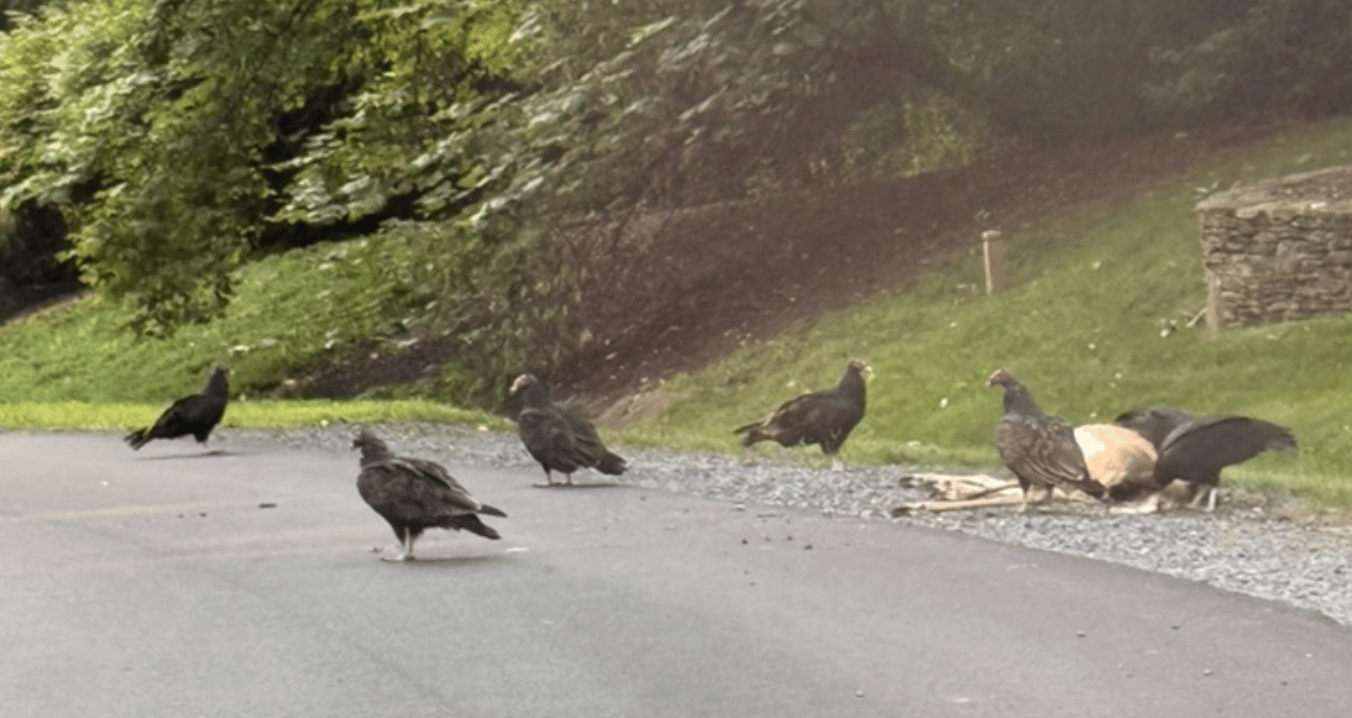
You might be wondering why I am going on a winding tangent here about a dead deer and Spanish bureaucracy. I’m glad you asked! It’s because I am procrastinating. I have several urgent writing projects that need to be addressed, and I am doing anything to avoid starting. In fact, as an act of defiant procrastination, I am going to delay even longer, and devote this whole newsletter to that very topic.
Procrastination is typically thought of as a time-management issue. But Timothy Pychyl, a psychologist at Carleton University in Canada, argues that it’s more an issue of emotion management.1 He notes that many people cope with negative feelings surrounding a task or responsibility by simply avoiding the task, at least temporarily. You have probably experienced this if you have put off a difficult conversation and justified it by saying, “I can’t deal with this right now.”
Whether it’s a failure to manage time or emotions, in this view procrastination is still painted as a negative. However, research shows that in certain circumstances, procrastination can improve the quality of our decisions and work. As Adam Grant notes in his book Originals, in ancient Egypt, procrastination was described with two different words: “One denoted laziness; the other meant waiting for the right time.” In this view, procrastination could indicate the vice of sloth or the virtue of prudence, depending on your habits and the tasks at hand.2 Here are four tips for putting off the right things in the right way.
- Diagnose yourself. While strategic, occasional procrastination can be beneficial, chronic procrastination is a problem. To find out if you suffer from it, ask yourself whether the way you delay tasks makes you feel out of control or unhappy. Do you skip time with friends and family on the weekends to do work that you should have done during the week? Are you pulling all-nighters when you have plenty of time during the day to finish your work? If so, procrastination might be a vice for you.
- Deploy procrastination strategically. Creativity needs a little time. Not too much—just a little procrastination to let the ideas ferment. I have adopted the practice of waiting a day to start writing after having the initial idea for a project. I jot down my idea, think about it, sleep on it, go for a walk, and then start on it. If the writing is hard, I do the same thing all over. I don’t put it off for a week—just a day or two. Usually it flows nicely at that point; if it doesn’t, then I have to use a bit more force and just write.
- Don’t fritter away your stalling. Remember that putting off creative tasks is useful because it allows you to interrogate the ideas in your mind. It won’t work if you spend your period of procrastination doomscrolling.3 Mindless social-media and internet use not only wastes our procrastination time; it also feeds the habit.4 If you are going to put off a task, go for a walk instead—an activity that has been shown to boost creativity.
- Procrastinate by learning new things. Use your procrastination time to wade into new and interesting ideas—which can, in fact, stimulate the original creative task that you were putting off. If I could make a suggestion for how to do so, check out my latest episode of Office Hours (hey, I’m just following the procrastination research here). It’s a special show, because it marks the one-year anniversary of my podcast. I invited several young adults to be in conversation with me about love and friendship.
OK, now back to staring at the wildlife out front, instead of doing my work.
See you next week,
Arthur

P.S. - I recently joined the faculty at Vanderbilt University, and I'm excited that Vanderbilt’s Owen Graduate School of Management is launching my first Executive Education program: Leadership and Happiness. Registration is open now for current and emerging leaders across the for-profit, nonprofit, and government sectors, and many organizations offer professional development or continuing education support to cover this program. You can enroll directly in the standalone Leadership and Happiness Virtual Course, which runs for eight online sessions from September 28 through November 30. For those who want to go deeper, you can secure your spot for the Leadership and Happiness Retreat option, which combines the virtual sessions with an exclusive, in-person deep dive in Boca Raton, Florida, from December 7–9. I hope you'll join me for this inaugural Vanderbilt program.
References
[1] Pychyl, T.A. (2020). Negative Emotions Today Predict Procrastination Tomorrow. Psychology Today.
[2] Grant, A. M. (2017). Originals: How Non-Conformists Move the World. Penguin Books.
[3] Brooks, A. (2021). How to Break a Phone Addiction. The Atlantic.
[4] Oppezzo, M., & Schwartz, D. L. (2014). Give your ideas some legs: the positive effect of walking on creative thinking. Journal of Experimental Psychology: Learning, Memory, and Cognition, 40 (4), 1142- 1152.
.png)
.png)