


.png)
I’ve noticed over the years that the questions I get from readers and listeners tend to bunch around specific topics, which I can never predict. For example, lately, for some reason, I have been asked a lot of questions about the male mid-life crisis—the “freakout.” You know: the red sports car; the age-questionable special friend; the sudden interest in peptides to build muscle. Sometimes people ask if I ever had one of these freakouts myself. I tell them that my whole adulthood has been just one big, slow-rolling midlife crisis, with four completely different careers—though, blessedly, just one marriage, to Mrs. B. (I will add, however, that she often introduces me as her “first husband,” which makes me nervous.)
I’ve studied the phenomenon, however, and these kinds of freakouts can take many forms, from sudden emotional storms, to slow-rolling personality changes. For example, when my grandfather was in his mid-forties, right in the middle of WWII, he abruptly quit his job running a mission school in the Navajo Nation in New Mexico. No blowups or even any apparent problems—he just up and quit. They packed up the car, and drove to Chicago, where he had no job waiting.
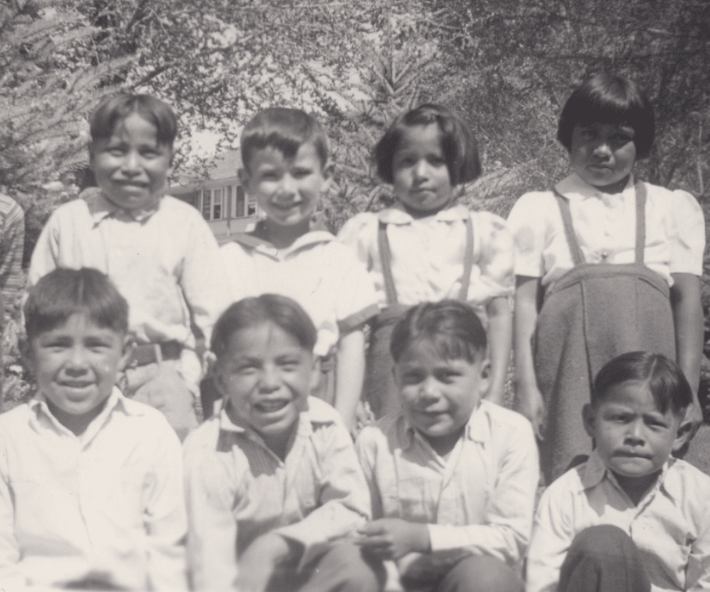
My dad’s midlife “event” was even more mysterious. He was a lifelong professor at a small liberal arts college in Seattle, and a true homebody: We never considered moving, and he rarely traveled. Then, at the age of 43 (I was 15), in a sudden restless mood, he abruptly went to Cincinnati, to a mathematics conference. That was odd enough, but it got weirder. There, he met another math professor, who taught at a similar college in Grand Rapids, Michigan. Like my dad, he was in his early forties, a church-going, married, salt of the earth type, with one son still at home who was exactly my age.
Late at night in a bar in Cincinnati, the two men cooked up a plan to trade lives for a year—jobs, houses, pretty much everything. (No, not their wives, you reprobates! This wasn’t the Swingin’ Sixties, thank God.) My brother had just left for college, so just my parents and I got in the car with nothing but our clothes and drove east, while the Michigan family drove west. For a whole year, we lived their lives; they lived our lives. My dad did the other guy’s job; my mom became active in their neighborhood. Meanwhile, I went to the other kid’s school; slept in his bed; rode his bike; read his comic books; and hung out with his friends.
At the end of the year, we all switched back. The two dads never spoke again. I never even met the other kid, nor did my mom ever meet his mom. My dad never did anything like that again. It was like a punctuation in the space-time continuum; a temporary wormhole into a parallel life; a surrealist European art film that doesn’t make sense and where nothing actually happens.
Most freakouts in life are neither that calm nor that…odd. And in fact, the majority aren’t mid-life events, but rather sudden storms which result from what social scientists call emotional flooding. That’s my topic today.
Freaking out—either suddenly or over a long period of time—rarely makes matters in life better. In the fast-happening variety, the experience usually involves the amygdala, the part of the brain that automatically produces basic emotional responses to outside signals, including danger. When strongly stimulated, the amygdala takes control of your mental processes, for good (you outrun a tiger) or ill (you blow up your marriage).
Knowing you shouldn’t freak out is easy enough, but actually preventing your emotions from taking over when you get a letter from the IRS can feel like another challenge entirely. This requires what some social scientists call metacognition: becoming aware of your own feelings and observing them as impartially as you can.1
Consider these three practices to be more metacognitive in daily life.
- Count to 30 (and imagine the consequences). Say you receive an insulting email from a client at work, and want to fire back an indignant response. Don’t write back yet. Instead, slowly count to 30; imagine your boss reading the exchange (which she might); then imagine seeing the person face-to-face after he reads your response. By the time you reach 30 seconds, you’ll have cooled down—realizing you don’t want the terrible consequences that would come from your amygdala hijack.
- Observe your feelings. The Buddha taught his followers in the Mahāsatipatthāna Sutta that, to manage emotions, one must observe them as if they were happening to someone else.2 Try this yourself when you have a strong disagreement with your partner or a friend and are feeling angry. Sit quietly and think about the feelings you are experiencing. Observe the anger as if it were happening to someone else. Then say to yourself, “I am not this anger. It will not manage me or make my decisions for me.” This metacognition will leave you calm and empowered.
- Write it down. You may have noticed that when you are upset, if you write about what you are feeling, you immediately feel better. Journaling is in fact one of the best ways to achieve metacognition, which in turn creates emotional knowledge and regulation, which provide a sense of control. In one study published in 2020, for example, undergraduates who were assigned structured self-reflective journaling were better able to understand and regulate their feelings about learning.3
See you next week, but probably not in Grand Rapids,
Arthur


P.S.— Months ago, my team and I created a digital version of me—use it to go deeper on this week’s topic, or on anything about building a happier life.Don’t know where to start? Try this prompt: Give me a simple practice I can use in the moment to cool down and make a better decision. Try it here.
References
[1] Livingston, J. A. (2003). Metacognition: An overview. ERIC Clearinghouse on Assessment and Evaluation.
[2] Thanissaro Bhikkhu. (Trans.). (2000). Maha-satipatthana Sutta: The great frames of reference (DN 22). Access to Insight.
[3] Alt, D., & Raichel, N. (2020). Reflective journaling and metacognitive awareness: insights from a longitudinal study in higher education. Reflective Practice, 21(2), 145–158.
.png)
.png)