I hope your week was pleasant. Over at Casa Brooks, ours has been lovely, starting out with a family dinner featuring a delicious roast cooked up by Mrs. B and the usual chaos caused by four grandsons aged three and under. (We found some roast between the cushions of the couch.) Meanwhile, I had a bit less travel than usual, with a trip over to Texas Christian University and a few other odds and ends. Plenty of time for thinking. Which is mostly good, though my mind, unconstrained, tends to turn to worries.
What does old Arthur have to worry about, you might ask? I’ll find something! Not nuclear war or anything apocalyptic like that, though. It’s usually little cosmetic things that rob me of fun times. For example, as a young man I fretted endlessly that I might be losing my hair. Isn’t that ridiculous? Ha ha ha ha ha ha help...

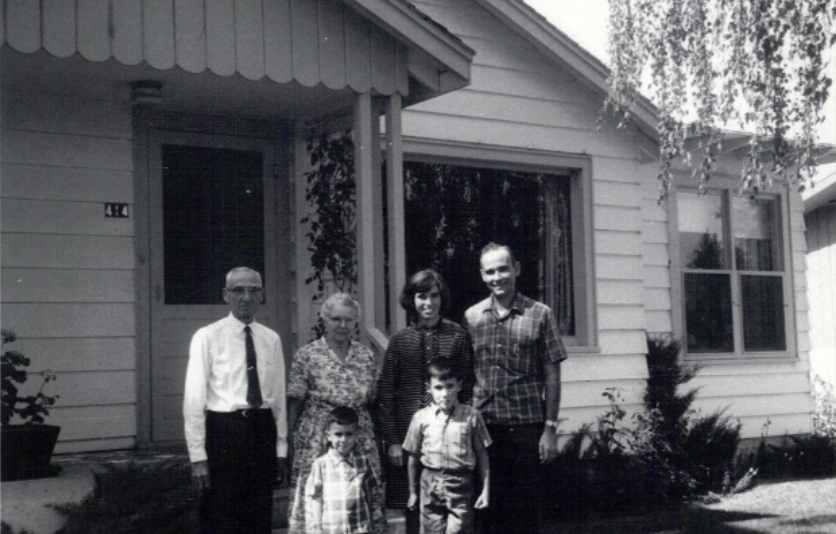
These days I worry about things around the house. For example: a strange, unidentified scratching sound coming from the garage of late. I inherited this tendency from my late father, who for years worried himself sick about starlings nesting in the eaves of our home in Seattle. “They’ll multiply and compromise the structure,” he agonized. “We might as well sell the place while we still can. It’ll be worthless in five years.”
We got to the bottom of the scratching sound, incidentally. Turns out we had a raccoon who figured out how to get into our trash bin and was spending his nights in there, gorging himself on whatever delights the Brookses were throwing away. He had defeated my ingenious varmint-proofing system of bungee cords, using his little opposable thumbs and—I must concede—respectable intelligence. “He doesn’t even have a PhD like you,” Mrs. B remarked dryly, which I felt was quite unnecessary and insensitive.

I have been doing a little self-work on my worrier nature of late, though, and wanted to share a few findings in this week’s newsletter, which might be helpful to you.
My total baldness <sob> notwithstanding, research shows that worrying is not based in reality most of the time. As the Stoic philosopher Seneca noted, “We suffer more often in imagination than in reality.”1 The starlings actually won’t reduce the house’s value to zero.
A number of psychological theories have been advanced to explain chronic worry. One of the most prominent is called the avoidance model, which explains how worry can become obsessive and intrusive in our lives.2 This model argues that inveterate worriers replace thoughts of clear outcomes of problems, especially potentially catastrophic ones, with a hazy sense of negativity that’s harder to act upon. If you are a worrier, simply willing it away is something you have probably tried—unsuccessfully—many times. The science gives us a better strategy, based on worry’s component parts.
- Write your worry down. Anxiety, of which worry is a component, is essentially just unfocused fear. Without a true focus, fear is a phantasm that you will struggle to deal with adequately. Much better to focus the fear by articulating it to yourself. You can do this by making a list: When you are worried about a bunch of things, take a sheet of paper and write down the five that you’re most anxious about. Naming them in a list makes them emotionally manageable.3
- Envision yourself taking action. Remember that worry generally focuses on problems but avoids actual outcomes. So, on your worry list, write down the best outcome for each problem, the worst outcome, and the most likely outcome. Then add what you would do in each instance. With that, you’ll be able to park the problem mentally and experience relief from worry.4
- Act. Worry robs you of valuable time in your life. When you wake up in the morning, declare your intention to stop spending time this way. Here’s what I say: “I don’t know what this day will bring, but I am alive to experience it and will not waste it worrying about things I cannot control.” (Another good one is the Serenity Prayer.) Will you still worry some? Probably, but this statement of intent can set you on a better course. Research does in fact show that this type of mental exercise—which involves identifying specific alternate, goal-oriented behavior—promotes goal achievement.5
There’s much more to say about hope and optimism, but in a rare exercise of brevity, I’ll leave it at that. Check out my newest episode of Office Hours, with the master of optimism himself, Simon Sinek.
Until next week, don’t forget to get gas,And if worry and anxiety are still getting in the way of living a good life, I recently devoted an episode of Office Hours to this very problem. Tune in for a deeper dive on how to manage anxiety here, and make more room for happiness and adventure in your life.
See you next week,
Arthur
P.S. - We’re hiring! ACB Ideas is looking for a Marketing Associate. If you are a creative, detail-oriented self-starter who wants to grow with my team and help bring my work on happiness to a wider audience, learn more and apply here.P.S. If you like learning about the science of happiness in this newsletter, you might also enjoy the Meaning Membership. It’s a community I created to explore the big questions of life together. This month, in my live, virtual lecture, we’re discussing one change none of us can control: getting older. I’ll draw on my book From Strength to Strength to explore how to turn our changing strengths into greater purpose and joy. I hope you’ll consider joining us.
References
[1] Seneca, L. A. (1917). Moral Letters to Lucilius (R. M. Gummere, Trans.). W. Heinemann.
[2] Behar, E., DiMarco, I. D., Hekler, E. B., Mohlman, J., & Staples, A. M. (2009). Current theoretical models of generalized anxiety disorder (GAD): conceptual review and treatment implications. Journal of anxiety disorders, 23(8), 1011–1023.
[3] Brooks, A.C., Winfrey, O. (2023). The Power to Decide How You Feel.The Wall Street Journal.
[4] Hoyer, J., & Beesdo-Baum, K. (2012). Prolonged imaginal exposure based on worry scenarios. In P. Neudeck & H.-U. Wittchen (Eds.), Exposure therapy: Rethinking the model—refining the method (pp. 245–260). Springer Science + Business Media.
[5] Gollwitzer, P.M. (2011). Goal Achievement: The Role of Intentions. European Review of Social Psychology, 4(1), 141-185.