


.png)
Happy fall to you and your family. I hope you are enjoying fun autumn activities with cloying names, like “leaf peeping.” One tradition we always followed when our kids were little was apple picking, in which we’d find an orchard on the edge of town that had avoided bankruptcy by running the world’s greatest bamboozle: Get people to pay three times the market price for sour, thick-skinned apples that customers pick themselves while trying to avoid getting stung by bees, and wind up buying 50 pounds’ worth because each child fills their own bag. For an extra $20, there is always a “petting zoo,” which is usually just a clinically depressed goat.
Not to date myself, but when I was a kid, apple picking was actually work. Every year, our family did it at scale to get produce that was cheaper and healthier than what you found in the supermarket. To me, apple picking for fun is just live-action role-playing of manual labor. “For an extra good time after this,” I used to tell Mrs. B as we headed out to the Flimflam McScamstein Family Orchard, “let’s take our kids to shovel out a chicken coop! Or maybe we should become amateur chimney sweeps.” Apparently, this very good point on my part suggested I had an “attitude problem.”
If you’re wondering why we ate so many apples when I was young, it’s because we kept a mostly vegetarian diet and had access to eastern Washington state orchards in a town called Yakima, where my grandparents lived. Getting over there meant a long drive over the Cascades from Seattle, however. This stressed out my dad every time, because there were extensive stretches without a gas station. Whenever the gas gauge got to the halfway point, he’d sigh loudly and announce, “I doubt we’ll find gas before the end of this tank.” At a quarter tank, he would entertain the worst: “We’ll never make it.” Less than that, the rhetoric got dark: “We’ll be sleeping in the car tonight.” Every trip was potentially a modern version of the Donner Party.
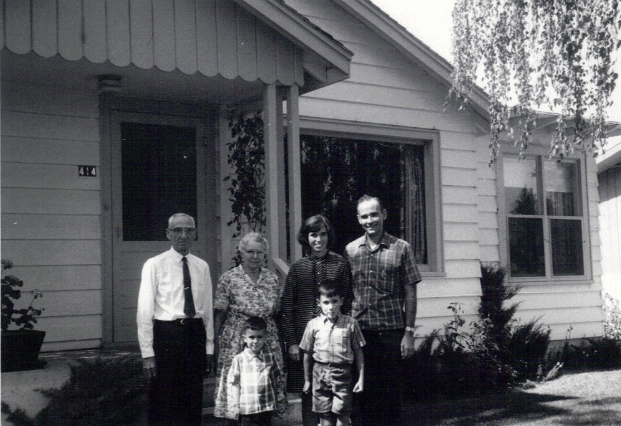
Years later, I asked him why he did this. He thought about it, and told me he preferred to be pleasantly surprised rather than bitterly disappointed, so he imagined the worst. In a strange way, my dad was pessimistic but hopeful at the same time. Does that seem impossible? Well, that’s our topic today.
Are you an optimist? A hopeful person?
People tend to use hope and optimism as synonyms, but that isn’t accurate. In one 2004 paper in the Journal of Social and Clinical Psychology, two psychologists used survey data to parse the two concepts.1 They determined that “hope focuses more directly on the personal attainment of specific goals, whereas optimism focuses more broadly on the expected quality of future outcomes in general.” Optimism is the belief that things will turn out well; hope makes no such assumption but is a conviction that one can act to make things better.
The Catholic nun and mystic Teresa of Ávila believed that hope comes from will and commitment. As she poetically wrote in the 16th century, “Hope, O my soul, hope…the more you struggle, the more you prove the love that you bear your God, and the more you will rejoice one day with your Beloved, in a happiness and rapture that can never end.”2 Religious or not, we can all learn from Teresa’s assessment and commit to increasing our hope for a better life and future by taking the following steps.
- Imagine a better future, and detail what makes it so. When you feel a bit hopeless, start changing your outlook. Say, for example, that the city you live in and love is struggling. You could easily conclude that the situation is hopeless, but you can do more for your neighbors’ happiness—and your own—if you instead imagine a city where everyone has a better quality of life. Rather than basking in the glow of a fictitious city and leaving it at that, make a list of the specific elements that will have improved; for instance, more affordable housing, better public policy and regulation, or more attention to substance abuse and mental-health needs.
- Envision yourself taking action. Continuing with the example above, envision yourself volunteering at a soup kitchen one day a week, advocating for better policies in your city’s government. Avoid illusions of being the invincible savior; instead, imagine helping one real person, convincing one policymaker, or increasing the compassion of one fellow citizen. Now, armed with hope, you can move on to the most important step of all.
- Act. Follow through on your ideas to help at the person-to-person level. I recommend trying two or three, because your first idea could likely prove unworkable or unrealistic. Your specific action might feel like an exercise in futility, because it is so small. This is the voice of hopelessness inside your head. Perhaps Mother Teresa summarizes it best: “Don’t look for big things, just do small things with great love.”3
There’s much more to say about hope and optimism, but in a rare exercise of brevity, I’ll leave it at that. Check out my newest episode of Office Hours, with the master of optimism himself, Simon Sinek.
Until next week, don’t forget to get gas,

P.S. - We’re hiring! ACB Ideas is looking for a Marketing Associate. If you are a creative, detail-oriented self-starter who wants to grow with my team and help bring my work on happiness to a wider audience, learn more and apply here.
References
[1] Bryant, F.B., Cvengros, J.A. (2004). Distinguishing Hope and Optimism: Two Sides of a Coin, or Two Separate Coins? Journal of Social and Clinical Psychology, (23)2, 273-302.
[2] Catholic Church. (1997). Catechism of the Catholic Church (2nd ed.). Libreria Editrice Vaticana.
[3] Mother Teresa. (2007). Mother Teresa: Come be my light: The private writings of the “Saint of Calcutta” (B. Kolodiejchuk, Ed.). Doubleday.
.png)
.png)