


.png)
Mrs. B and I just returned from our western states vacation, where we saw a number of natural sites (e.g. the Redwood Forest) as well as some good old American tourist traps that I remember from my youth, such as Trees of Mystery in Klamath, California, which is most memorable for the giant fiberglass sculptures out front of Paul Bunyan and Babe the Blue Ox.
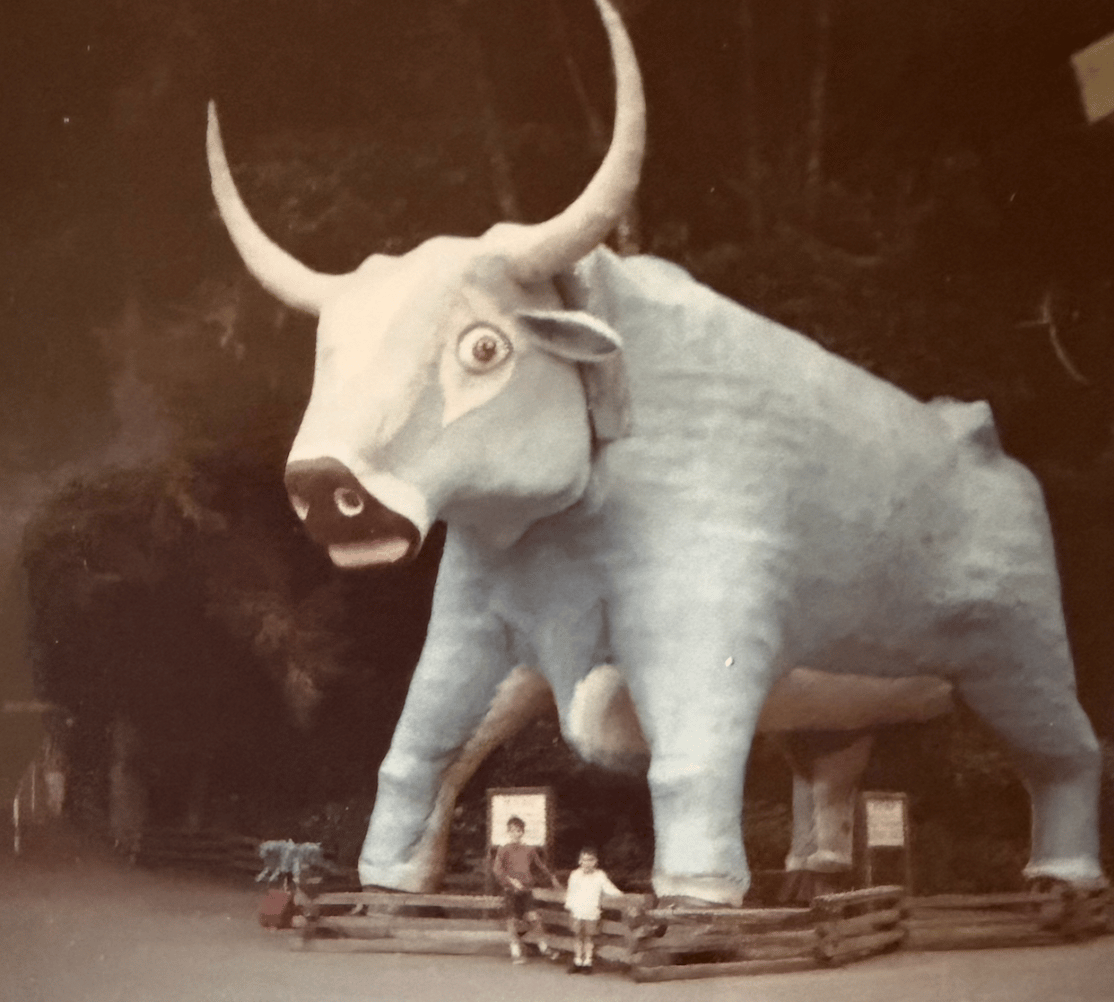
The photo above was taken on a car trip from my native Seattle down to Santa Barbara, California. It was not a family vacation, which we rarely took. Rather, my dad was doing PhD classwork at UC Santa Barbara that summer, and we made the trip by car because flying was too expensive. On the day of that photo, I doubt we did much more than pose for this picture, because no doubt we were trying to keep to a schedule.
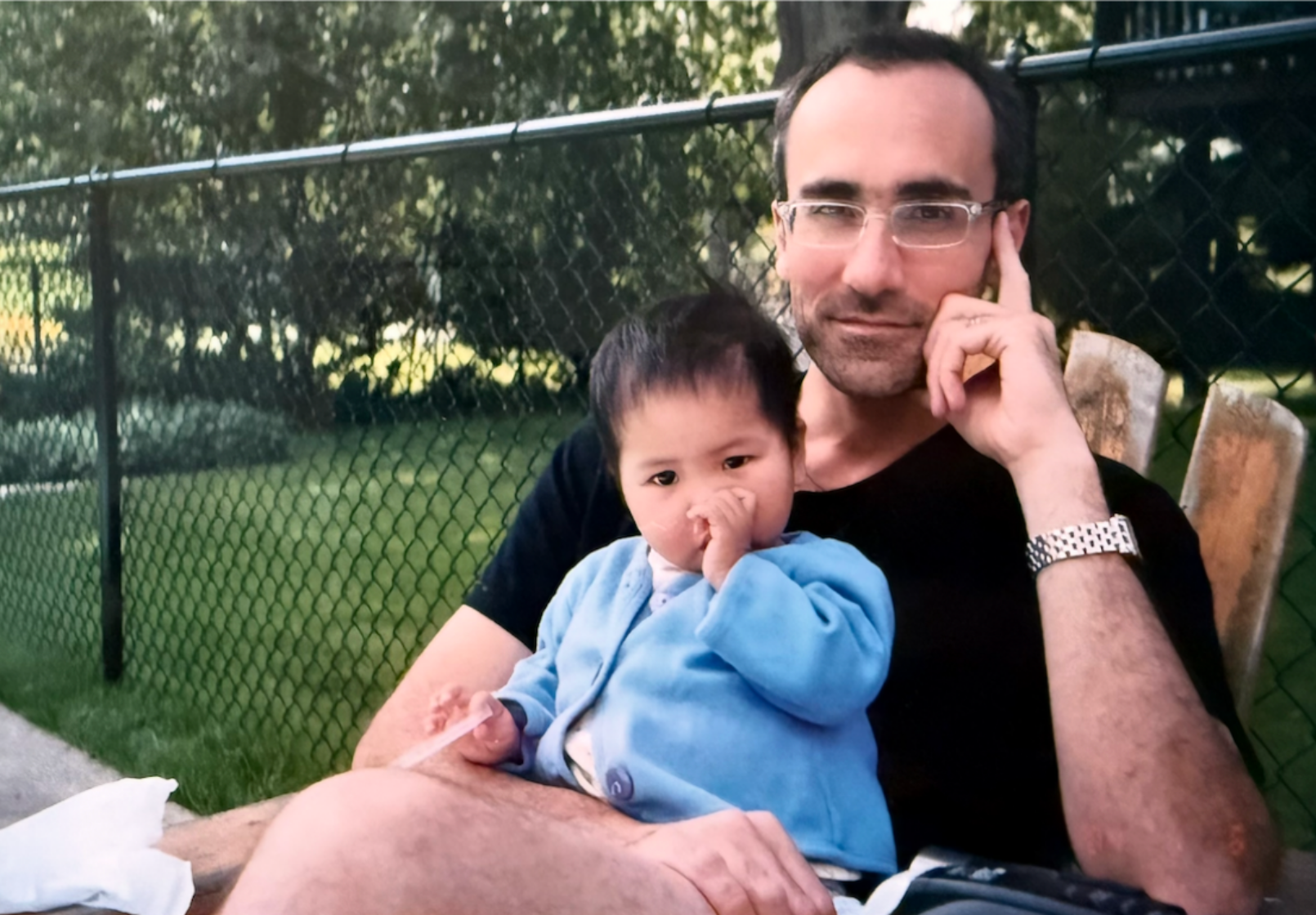
I often think about my dad, who passed away decades ago at the early age of 66. I am fortunate to have inherited from him my profession as an academic, as well as a sense of humor (despite his aversion for family vacations). Less fortunately, I also inherited his baldness. I don’t pick these three traits at random, by the way; in his life, these particular characteristics often merged. For example, when getting ready to lecture in the morning, I remember him looking in the mirror and saying, “This suit needs hair.” He grabbed a toupee out of the closet to wear to his (half horrified, half amused) freshman statistics class.
As a sullen teenager, this mortified me, of course. “I would never do that, thank God,” I thought. But today, the memory fills me with admiration. “Sadly, I’d never have the nerve to do that,” I think. And this raises a question I am often asked: How can I be more—or less—like my parents? That’s today’s newsletter topic.
The popular wisdom that people become more like their parents as they age has a scientific basis. A 2020 study in the Journal of Personality and Social Psychology revealed that genetically similar people act more alike as they age—but only if siblings and parents share similar environments, such as living in the same general cultural milieu.1 So people who see their parents often, live in the same city, or share a similar community will probably become more like their parents.
Unless, that is, you don’t want to. Scholars in 2008 tested the personalities of parents and children, but also corrected their estimates for “regard,” by which they meant an admiration for their parents that led children to want to emulate them. The higher the child’s regard, they found, the greater the genetic influence the parents’ personality had on the child’s; the lower the regard, the lower the similarity.2
Taken together, the research suggests that if you admire your parents and want to be more like them, you can and will be, especially as the years pass. But if you would prefer to be less like them, you can do plenty to create your own path.
Here are two ways to use this research in your life:
- Make the environment you want, and live in it. You can intentionally create a similar or different environment for yourself, compared to your family of origin. This enables you, in effect, to make your upbringing more or less heritable. Your genes are fairly fixed, but how they are expressed is strongly under your control.
- Use the lever of regard. You can make better decisions about your own adult life by listing the personality traits, beliefs, values, habits, and behaviors typical of your family, and putting a plus, minus, or zero next to each one, corresponding to whether that particular characteristic is one that you’d want to keep. For example, thinking about my dad: humor (+), interest in science (+), religious faith (+), undying love for wife (+). Meanwhile, intense sweet tooth (-), bad sleep hygiene (-). This exercise sets a level of regard for each aspect of your family that you name. So, this can become a handy lever to crank up or ratchet down—depending how much you want (or don’t want) a certain trait.
One last thought: We are all someone’s child, but you may also be, or may become, a parent yourself. Then your concern could be less how you’re turning into your parents, and more whether your kids will resemble you. You’d like them to emulate your positive traits, of course, and avoid your negative ones. A good place to start is to be completely honest with yourself and not pretend that those negative traits don’t exist or are somehow positive. Put simply, if you make yourself a better person, your kids will likely be better people, too.
See you next week,
Arthur

P.S. - I miss my dad.
References
[1] Mõttus, R., Briley, D. A., Zheng, A., Mann, F. D., Engelhardt, L. E., Tackett, J. L., Harden, K. P., & Tucker-Drob, E. M. (2019). Kids becoming less alike: A behavioral genetic analysis of developmental increases in personality variance from childhood to adolescence. Journal of personality and social psychology, 117(3), 635–658.
[2] Krueger, R.F., South, S., Johnson, W. and Iacono, W. (2008). The Heritability of Personality Is Not Always 50%: Gene-Environment Interactions and Correlations Between Personality and Parenting. Journal of Personality, 76: 1485-1522.
.png)