


.png)
I hope you’re able to get away for a bit of summer vacation. Perhaps the beach or mountains? This year, Mrs. B and I are doing both. We started in Sun Valley, Idaho, and then made our way over to my old stomping ground on the Oregon Coast: Lincoln City. This is where all of my happiest childhood memories were made during my yearly one-week trips to visit my aunt, who lived there. Most of my time was spent fishing and hunting for agates on the beach.
So you can imagine what Lincoln City is like, think Ocean City, Maryland—but 53 degrees and windy at the absolute peak of summer. To me, though, it was, and is, paradise. Every nook and cranny holds a treasured memory, which I recount to longsuffering Mrs. B every time I drag her there. “Oh, oh, look at that Dairy Queen!” I tell her, giddily. “I threw up in there once after having a bad corn dog!” Ah yes, the good old days.
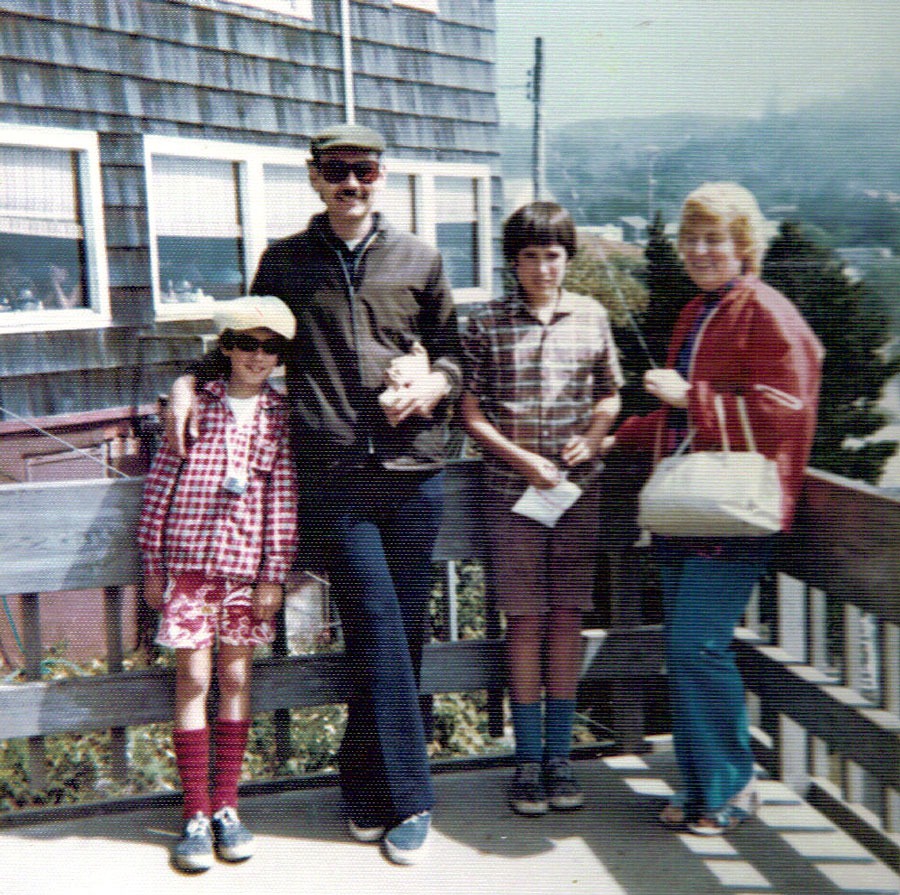
My aunt worked in those days as a receptionist at a hotel called the Spanish Head Inn, a place no one in our family would ever be able to afford. As a kid it seemed like where the Rockefellers might stay on vacation (if they somehow wound up in Lincoln City). We stayed in my aunt’s trailer. Seeing the Spanish Head’s guests filled me with awe, and well, a bit of envy.
And envy is our newsletter topic of the day.
The natural, evolutionary roots of envy are easy to imagine. Social comparison is how we gauge our place in society, and thus how we know what to strive for in order to stay competitive for resources and viable in mating markets.
If I could snap my fingers and eradicate envy from my life, I would, and I bet you would too. But envy is natural, and getting rid of it would be impossible for all but perhaps the most enlightened. Cosimo de’ Medici in the 15th century had a more workable approach. He compared envy to a weed. The job is not to try to eradicate it, rather, just don’t water it. Here are tips and tricks toward this end.
- Focus on the ordinary parts of others’ lives. In 2017, researchers asked a group to think of demographically similar people whom they considered to have exceptionally good circumstances in their lives. They found that focusing only on these circumstances led to painful contrast with participants’ own lives, and thus to envy.1 But when they were instructed to think about the everyday ups and downs that these people surely also experienced, envy was diminished.
- Turn off the envy machine. Social media increases envy because it does three things: It shows you the lives of people more fortunate than you; it is easier than ever for anyone to flaunt their good fortune to the masses; and it puts you in the same virtual community as people who are not in your real-life community.2 The solution is not to ditch social media; it is to unfollow people you don’t know. Use social media to keep up with real friends, learn interesting and empowering things, and maybe have a few laughs.
- Show your unenviable self. While you are working to curtail your envy of others, stop trying to be envied yourself. Wanting to display your strengths and hide your weaknesses from strangers is natural, but obscuring the truth to yourself3 and others4 is a path to anxiety and unhappiness. And as my colleague Alison Wood Brooks and her collaborators showed in a 2019 study on entrepreneurs in the Journal of Experimental Psychology, when the participants were honest not just about what they did right but also about how they failed, observers experienced less malicious envy.5
See you next week,
Arthur



P.S. - Behind all envious feelings is a completely natural desire for social comparison. Are you comparing yourself to a neighbor or colleague—who has more stuff than you, or who is better than you at a particular thing? Social comparison in healthy doses keeps us motivated, but at high levels, it wrecks our happiness. If you’re interested in your own levels of social comparison, do feel free to take The Happiness Scale, which will give you an accurate assessment on social comparison (and more).
References
[1] O’Brien, E., Kristal, A.C., Ellsworth, P.C., Schwarz, N. (2018). (Mis)imagining the good life and the bad life: Envy and pity as a function of the focusing illusion. Journal of Experimental Psychology, 75: 41-53.
[2] Samuel, A. (2018). What to Do When Social Media Inspires Envy. JSTOR Daily.
[3] Brooks, A.C. (2021). Quit Lying to Yourself. The Atlantic.
[4] Brooks, A.C. (2022). Honesty is Love. The Atlantic.
[5] Brooks, A. W., Huang, K., Abi-Esber, N., Buell, R. W., Huang, L., & Hall, B. (2019). Mitigating malicious envy: Why successful individuals should reveal their failures. Journal of Experimental Psychology: General, 148(4), 667–687.

.png)
.png)